
The Anway Homestead
Thanks to the generosity of George and Gladys Meacock, Bob Henderson and many others, the Chilkat Valley Historical Society owns Charles Anway’s cabin, the remaining outbuildings and over an acre of the original Anway homestead.
Over the years, the restoration project has been funded by a National Historic Trust Preservation Hart Family Grant, a Federal Highway Administration National Scenic Byways Program Grant, and a State of Alaska appropriation through the efforts of former state legislator William “Bill” Thomas.
We’ve completed the restoration of the cabin exterior. The restoration of the interior, to reflect Charlie Anway’s era, is now in the planning stages. An interpretive plan developed by Alaska State Parks remains to be implemented and the project needs more funding (of course), but we are optimistic that the full restoration will be completed in the next few years.
Anway Homestead Restoration
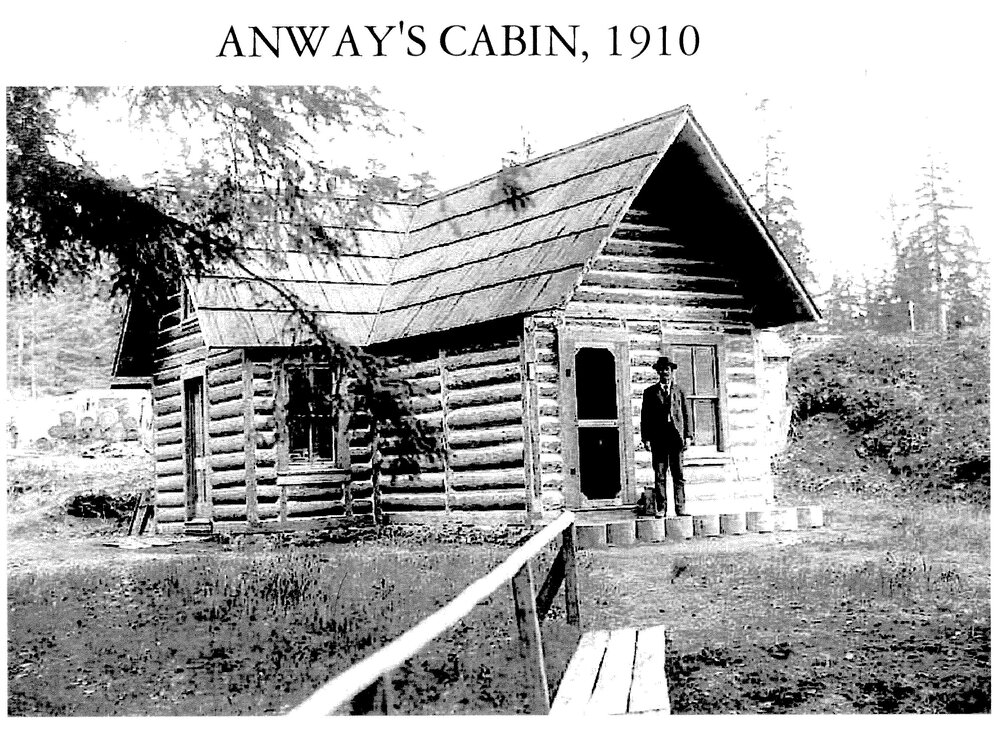
Charles Anway (b.1857, d.1949) was a Klondike Gold Rush-era prospector who homesteaded in Haines and then pioneered commercial agriculture in Alaska. The restoration of Charles Anway’s historic homestead, located near 1.5 mile Haines Highway, will create an interpretive and educational destination for Chilkat Valley residents, schoolchildren and visitors traveling along the Haines Highway, a National Scenic Byway. The restoration provides a window to the early 1900’s Alaska homestead-living.
The project is a component of the Haines Highway Management Plan and the Alaska Marine Highway All American Byway, as Charlie’s life was intimately involved with these transportation corridors for over a half century. The exterior restoration phase took over a decade to complete. Throughout the project we relied on an assessment provided to CVHS by renowned Historical Preservationist, Harrison Goodall.
Summer 2018 was a big year for the restoration effort: we repaired a flood damaged root-cellar and over 80 volunteers kicked in to tame the ever-needy vegetative jungle on the property. After completing drainage improvements and re-pouring the concrete floor in Charlie’s root cellar we could say, at last, that the cabin exterior restoration was complete.
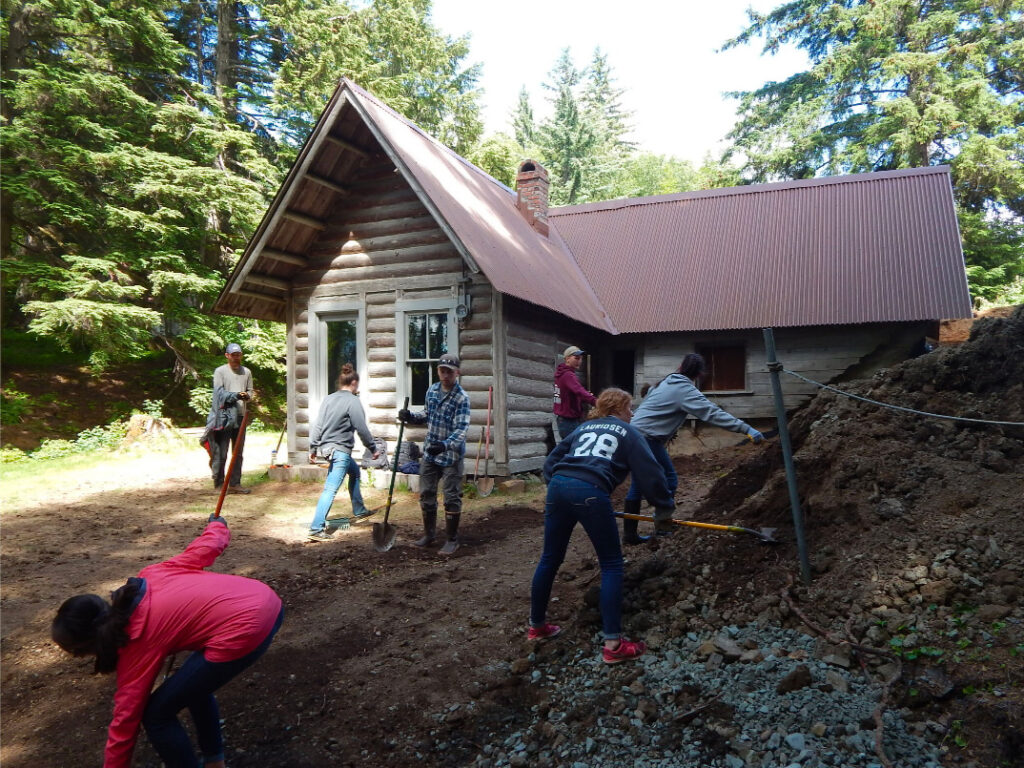
Winter 2018 was cold with little snow cover and revealed a new drainage problem. During our first foray onto the property that spring, to open the cabin and clean up, we discovered a “great glacier of ice” throughout the root cellar and connecting breezeway that spilled into the kitchen. The drainage issue, occurring after nearly 100 years of dryness, was substantial and required exposing the entire root cellar exterior and gutting it’s interior as well.
The cement root cellar floor, cracked and uneven, was removed and re-poured by lead carpenter Terry Jacobson and volunteers. The perimeter was excavated and a new french drain installed. Prior to pouring the new floor we installed drain rock and pipe, insulation and re-mesh. The ‘breezeway’ between root cellar and kitchen was also restored.
Rounding out this busy summer, the exterior trim received a touch of new paint and the exterior log work was treated with Boracare, per Harrison Goodall guidelines.
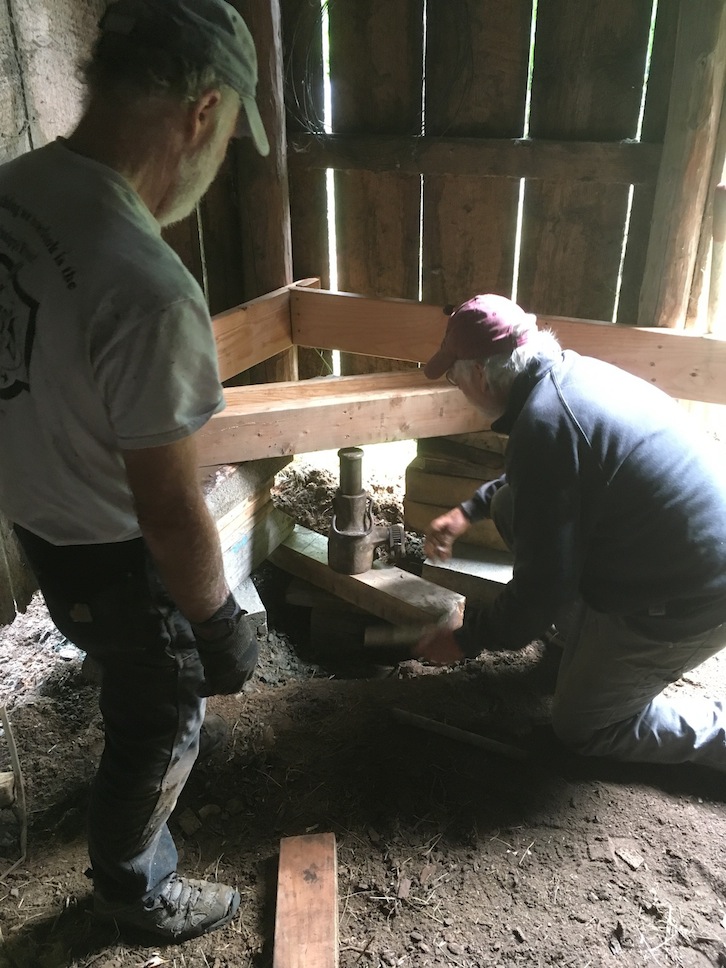
Charlie’s original woodshed also has a whole new cared-for look, based on Goodall’s restoration plans. The rotted foundation, sill logs and sections of wall were replaced. Rocks and gravel were placed underneath raising the building over a foot.
Stabilizing the the cabin and woodshed building was the first priority. Looking forward there are still many remaining parts to this project: cabin interior restoration, parking, finalizing an interpretive plan, and expanding the strawberry beds and planting apple and cherry trees. Most importantly, we want to get visitors to the property!
Interior Restoration Project
The Anway cabin interior restoration project is funded by the State of Alaska Office of History and Archeology (OHA). The grant will result in a detailed restoration plan, including priorities, procedures, material sources and cost estimates for the interior rooms, specifically the kitchen and living room of the cabin.
Although the grant timeline was delayed due to COVID-19, the conservator’s report and guidance plan is scheduled to be received at OHA in mid-January 2021 for review, and then finalized by the end of February.
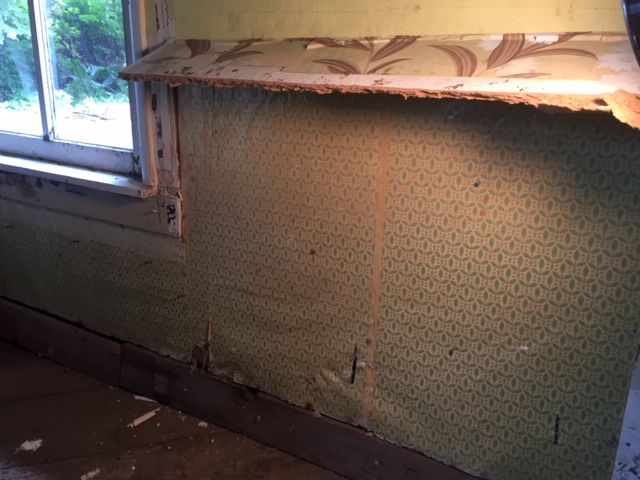
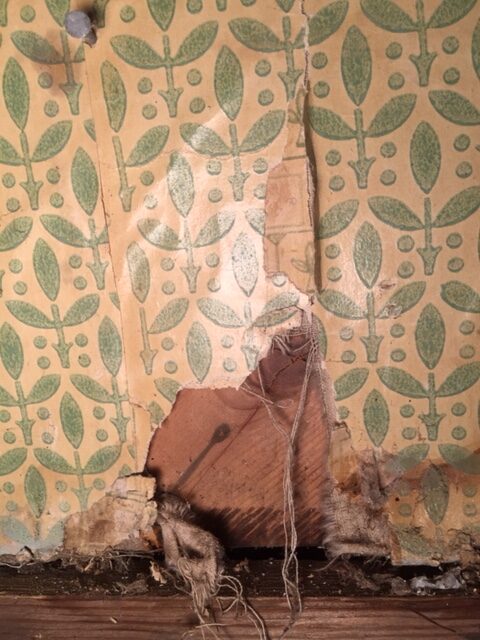
The project funds the work of professional Conservator, Nicole Peters, including her analysis and recommendations on the various extant wall and floor coverings in both the cabin’s living room and kitchen. Lab analysis of small samples will inform her recommendations.
The preservation goals focus on the historic era of Charles Anway, the realistic economic abilities of the CVHS, the level of professional conservation measures required, and constraints of the non-environmentally controlled cabin. These constraints will inform Nicole Peters final recommendations. Her fall, 2020 COVID-safe visit to the cabin allowed a two-hour public open house where visitors could see the interior before restoration work began and speak directly to Peters about her conservancy work.
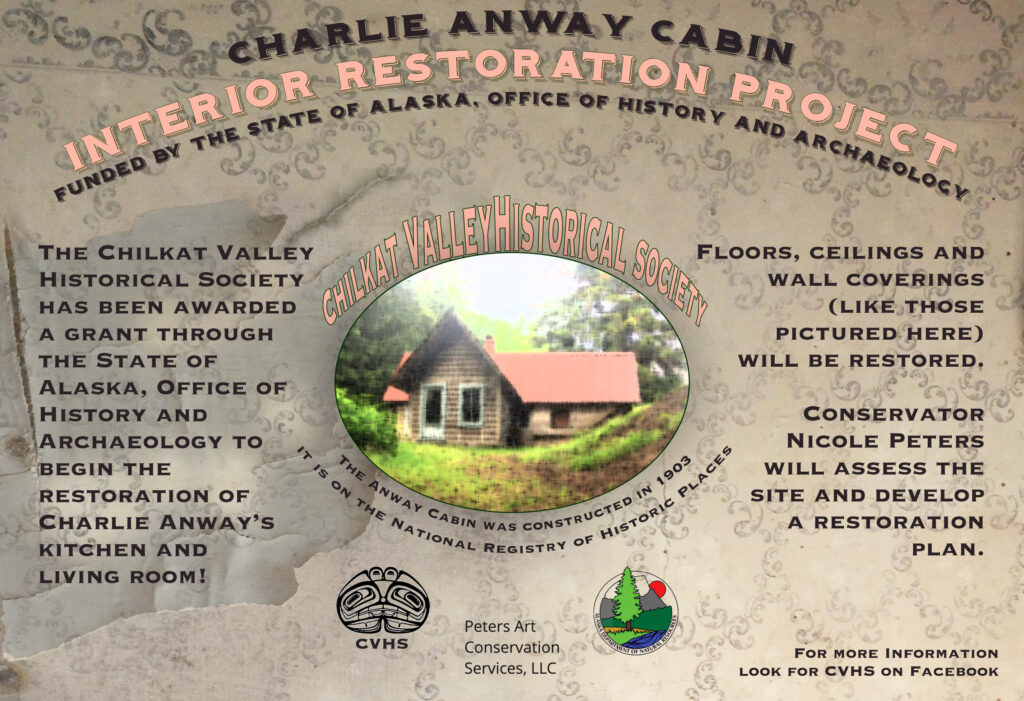
Graphic artist and project director, Andrea Nelson designed and posted a project sign at the cabin. Conservator Nicole Peters visited August 29-31 to complete her assessment OF Charlie’s Cabin interior with us.
Charles Anway
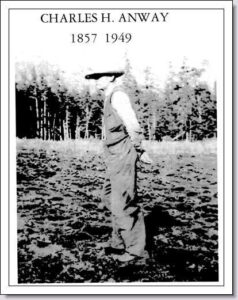 Charlie left Colorado in 1898 and headed for the Yukon in search of gold. Arriving in Alaska, Charlie abandoned his Klondike dream and came to Pyramid Harbor near Haines. Jack Dalton hired him to lead a pack train of horses to the Yukon along the Dalton Trail, which paralleled today’s Haines Highway.
While on the Dalton Trail, Charlie was impressed by the surrounding landscape and later staked mining claims at Nugget Creek, a Tsirku River tributary, 30 miles from Haines. However, at heart Charlie was a farmer. Growing up in Colorado, his mother had taught him how to garden. It followed that during his search for a homestead while wintering in Haines, Charlie’s top priorities were rich soil, sunlight and a water supply for crops.
Two miles west of town, Charlie found the perfect garden spot along the Chilkat River. By 1903 he surveyed his homestead (In 1911, it became the first patented in the Chilkat Valley), handcrafted a log home, planted a garden and began clearing land. Army Post, Fort William H. Seward, was under construction and provided a ready market, so Charlie decided to have a fruit farm.
As his farm overlooked the region’s transportation corridor, the Chilkat River, Charlie watched passersby. Well liked by everyone, Charlie welcomed visitors as they walked the trail and sailed their canoes past his cabin to their mines, cabins and villages. In 1906 a road was built from Haines to copper mines in nearby Canada. Soon merchants were hauling freight by wagon to Klukwan and to Porcupine Creek. During WWII the road was extended to meet the newly constructed Alaska Highway.
Charlie obtained starts from excellent strawberries growing in Jack Dalton’s garden at Porcupine. These berries were his first crop. Applying his superb farming skills, Charlie grew the huge, award-winning berries that made him famous. His strawberries were so large, red, and sweet that they were celebrated with the town’s annual Fourth of July Strawberry Festival, and Haines became known as the Strawberry Capital of Alaska.
Charlie cultivated the first commercial apple (1905) and sweet cherry (1930) orchards in Alaska and won awards for the first mature apples in the Territory. He also developed an early maturing, pink skinned potato called the Early Anway.
With help from Leon Ballard, the neighboring Vermiere girls and others, his farm prospered. Strawberries, apples, cherries, the Early Anway potato and vegetables were sold to Fort Seward. Strawberries were shipped to Skagway and Juneau via the Army boats and up to Bennett on the White Pass & Yukon Railroad. Charlie lived on his farm until his death in 1949.
Placed on the National Register of Historic Places in 2003 Charlie’s cabin was later donated to the Chilkat Valley Historical Society. The Society has undertaken a multi-year project to restore and preserve the cabin, outbuildings and grounds.
When restored, the cabin will offer a rare insight into the ingenuity and achievements of Alaskan pioneers in an original structure. Visitors will be able to visit Charlie’s simple, functional home and explore the surrounding area where he grew his crops. Artifacts from Anway’s homesteading life will be displayed in his home in a way that will engage people of all ages and backgrounds, and encourage active interest in the history of our community and state. Visitors will be able to view the simple, functional design of Anway’s living space, the root cellar he dug into the bank at the back of his cabin with a door leading directly into his kitchen/bedroom, and the ladder rising to his loft. His many self designed and handmade tools can be discovered in Charlie’s old woodshed.
Saving this historic property will allow the Chilkat Valley Historical Society to document and share the achievements and creativity of one of our early settlers. The renovated Anway property will be available to educators to help them teach about the early history of Haines and of Alaska. It will be available for tours during the summer tourist season.
By telling the story of the early pioneer life in Haines, and of Charlie Anway in particular, this project plays a vital role in offering an experiential understanding of Alaska’s History. Visitors to the site will learn about pioneer culture, values, and traditions, while acknowledging a great innovator of the past.